

Time to Read: 2 minutes
Article at a Glance:
- Getting in your own way means unintentionally creating barriers to your own growth through habits and behaviors like overthinking, blaming, avoiding, or assuming you have to solve everything alone.
- These patterns often come from understandable human needs (like wanting to feel safe, capable, or in control) but can still keep you and your team stuck if they go unexamined.
- Growth starts with noticing your patterns, owning your part, and looking at what you can influence.
- Progress isn’t about getting it right all the time. It’s about continually course-correcting when you notice you’ve drifted off track.
Have you ever struggled with a situation at home or work, only to later realize you were getting in your own way?
Some of these stories might sound familiar.
Sarah regularly struggled to finish her inventory spreadsheets on time, so she worked harder, putting in more and more hours to finish them. A coworker noticed her struggle and suggested they find a way to improve the process so it didn’t take as long. Two days later, they had created a more efficient system. If Sarah would have told her team about her difficulty instead of thinking she was the problem, they could have solved the problem faster!
Janet was never happy with the pace of work on her team. She wanted everyone to work faster so they could produce more. One day as she passed the break room, she overheard two coworkers talking about how she could be snappy when they came to her with issues, so a lot of the team avoided her instead of collaborating, which slowed down the work. Janet realized she’d been blaming everyone around her for the pace and didn’t see how she came off to others.
Patrick worked in the warehouse and regularly walked past a giant welder they never used. He knew they kept renting fuel canisters for it but never asked why. When a coworker brought in their personal welder to fix a piece of equipment, Patrick finally mentioned the canister, which led to a review of the situation and the realization that the rental was unnecessary. The result was a meaningful cost savings from a change that had been hiding in plain sight. But if he’d spoken up sooner, they could have saved money earlier!
Have you done anything like this? We all have.
Why We Get in Our Own Way
Getting in your own way means unintentionally creating barriers to your own growth (and your team’s growth!) through the way you think, react, avoid, interpret, or protect yourself.
We ALL do this sometimes, and there’s nothing wrong with you if you realize you’ve been holding yourself back somehow.
This often comes from very human intentions like wanting to feel safe, capable, respected, included, or in control.
But when those good intentions go unexamined, they can become sneaky patterns that keep us stuck.
How We Might Get in Our Own Way

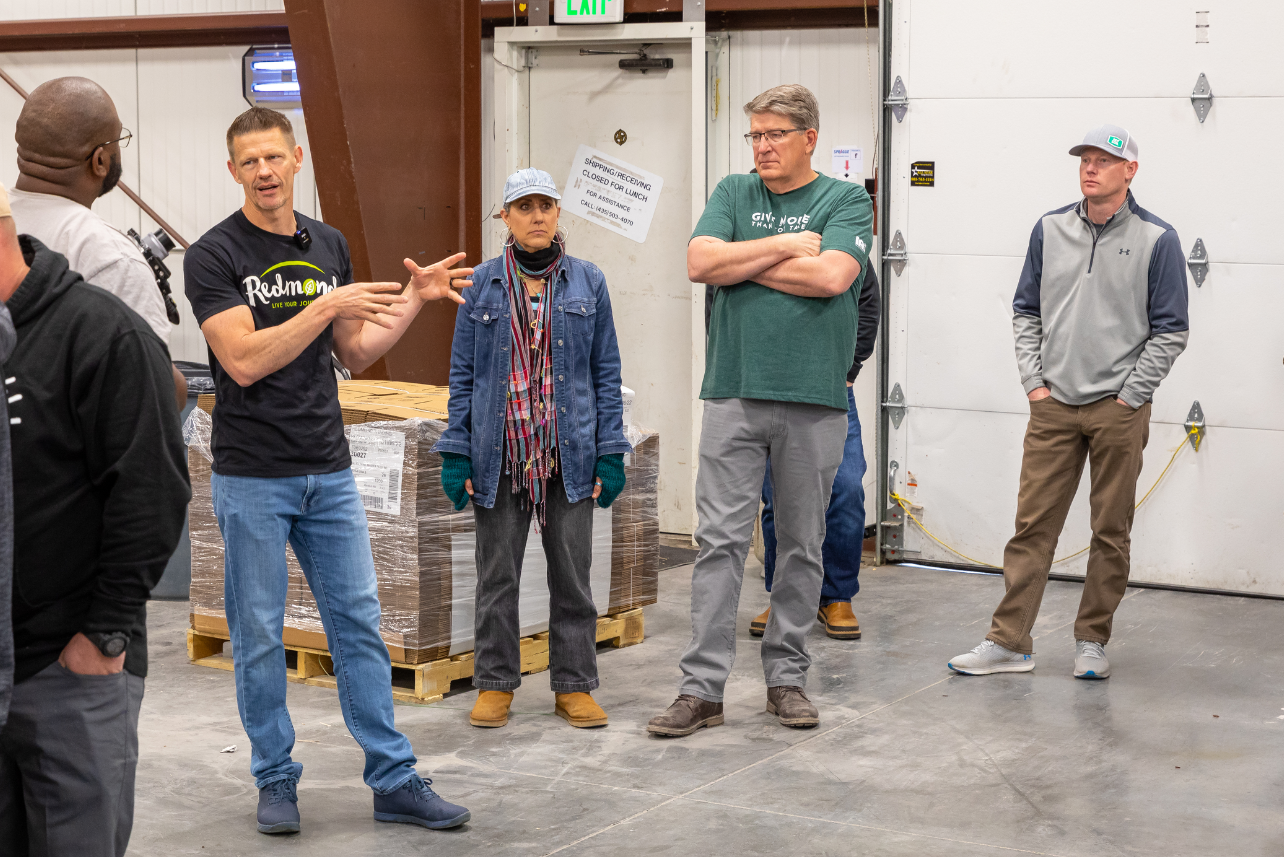
We asked a group at Redmond how they’ve gotten in their own way, and here are a few examples they shared.
· Telling myself stories, especially about what other people are thinking.
· Overthinking and rumination.
· Impatience with others or myself.
· Impatience with the process of growth and learning.
· Feeling like I need to have solutions instead of being willing to explore.
· Trying to prove myself.
· Not using Occhiolism; thinking my perspective is the only right one.
· All or nothing mindset.
· Not talking to other people and trying to do things alone.
· Not sharing what I’m seeing.
· Blaming others for problems.
· Beating myself up for problems.
· Chasing instead of allowing things to unfold.
These are only a few possibilities! Do you see yourself in any of these?
How to Get Out of Your Own Way

When you notice you’re getting in your own way, it’s important to own it, identify what you can influence, and adjust.
Ask yourself: What’s currently bugging you at work? How are you contributing to that?
Look at that list from earlier again. Where do you see yourself there? What adjustments can you make?
This isn’t an invitation for self-blame. If you’re the kind of person who tends to blame yourself instead of looking at the system, it can be easy to feel discouraged here. Take ownership for what you can control, but don’t beat yourself up. It isn’t helpful (or fun).
Maybe you decide to speak up and talk to your team if a process is clunky.
Or you want to practice sharing what you’re seeing if you tend to stay quiet.
Or you work on giving others a chance to speak if you tend to dominate conversations.
Or examine the stories you tell yourself and try a different story.
Or maybe this just means continuing to explore your Three Circles to find out what you’re truly wired for and where you’re helpful.
A Continuous Dance
Have you ever heard that airplanes are off track 99% of the time, but they consistently course correct so they get to where they need to go? That’s how we make progress as well.
The first step to developing this self-awareness is to pay attention to how and why you do things. That’s it. You don’t even have to do it perfectly, just start doing it more.
It’s okay to be human and get in your own way, but remember, you have the power to notice when you’re veering off course and to make changes. You have the choice! This is a never-ending dance with the growth process.
